Open concept kitchens aren’t just a passing trend – they remain the heart of modern homes in 2025. These versatile spaces have evolved from a simple design choice in the ’90s into a lifestyle necessity that shapes our daily interactions.
The open kitchen layout has become standard in contemporary homes, naturally flowing into living and dining areas. These spaces offer more than visual appeal – they make casual family meals possible and encourage conversations during cooking while making entertaining feel effortless. Open concept kitchen living room designs create brighter spaces filled with natural light. Parents can watch their children during meal prep, adding both function and peace of mind.
This piece will show you why open kitchen concepts have stood the test of time. You’ll see popular designs for 2025 and learn smart tips to create functional open kitchen spaces that balance style with practicality. Whether you’re planning a renovation or curious about this lasting trend, you’ll understand what makes open kitchens the enduring centerpiece of modern living.
Why Open Concept Kitchens Became Popular
People started breaking down their kitchen walls much earlier than most homeowners might think.
Origins of the open kitchen concept
Frank Lloyd Wright designed what many call the first open-concept kitchen in 1934 for Malcolm and Nancy Willey in Minneapolis. Mrs. Willey wanted to cook and entertain at the same time. This sparked Wright’s groundbreaking design decades before open floor plans became popular. Wright’s design managed to keep efficiency while connecting living areas through a half-wall and picture windows. This created a more integrated space filled with natural light.
How modern lifestyles influenced kitchen design
Kitchen spaces changed dramatically after World War II. They evolved from purely functional areas into family activity hubs. Kitchens in the 1990s grew bigger as houses expanded. They transformed from practical workspaces into “decorative spaces” with luxurious cabinets, taller ceilings, and high-end appliances. Research reveals that 87% of homeowners want more inclusion and visibility with open kitchen layouts that support activities beyond cooking.
Today’s families give high priority to spaces that support entertaining, remote work, and watching kids – activities that don’t work well in closed kitchens. On top of that, it makes sense that open kitchens match today’s priorities for relaxed living and entertaining. Hosts can now involve guests while preparing meals.
The shift from closed to open layouts
This change picked up speed around 2005. New homes with updated kitchen plans – big, open, and central – started appearing nationwide. Television played a vital role in cementing this trend. Shows like “The Property Brothers,” which started in 2011, made design and DIY projects available to everyday viewers.
HGTV programs like “Fixer Upper” displayed so big connected spaces that showed kitchens becoming main living areas. Then formal dining rooms started disappearing as homeowners accepted versatile open kitchen designs.
Removing walls creates smooth flow and improves social interaction between kitchen, dining, and living areas. More than that, open-concept kitchens maximize natural light. This creates an airy, spacious feel that lines up with modern living’s focus on connection and flexibility.
Key Benefits of Open Kitchen Layouts
The practical advantages of open concept kitchens become clear as soon as you step inside. These well-designed spaces provide benefits that are way beyond the reach and influence of just looking good.
Better flow and accessibility
Taking down walls creates a continuous connection between kitchen, dining, and living areas. An open kitchen layout removes barriers and creates clear pathways that make movement smoother throughout the space. People can move around easily without structural divisions, which helps a lot during busy mornings or while preparing meals when family members need to move through the space.
More natural light and ventilation
The abundance of natural light stands out as one of the best features of open concept kitchen designs. Sunlight flows freely throughout connected spaces without walls blocking its path. Research shows that natural light substantially improves mood and increases efficiency while revealing the true colors of materials and finishes. It also comes with proper ventilation that helps remove stale air and kitchen odors. This reduces humidity that can cause mold and mildew. Many homeowners improve these benefits by adding skylights that release warm air and clear cooking odors without taking up cabinet space.
Encourages social interaction
Open kitchen concepts reshape the scene of social dynamics at home. The cook stays connected with family or guests in adjacent living areas instead of being isolated behind walls. This design promotes natural conversation and interaction. Hosts can prepare meals while staying involved with guests, making entertaining more enjoyable. The kitchen becomes the true center of all gatherings.
Ideal for multitasking and family life
Parents can keep an eye on children playing nearby while preparing meals in open kitchens. This versatile space works as a central hub where families can do homework, prepare meals, and have casual dining at the same time. The flexibility handles different needs—from quiet family dinners to bigger social gatherings—in a space that brings everyone together.
Popular Open Kitchen Designs in 2025
Modern homes in 2025 show a clear shift in kitchen design. People want open kitchens that look good and work well. Here’s what’s trending in today’s homes.
L-shaped and U-shaped open kitchens
L-shaped kitchens lead the way in residential layouts. They blend style and function well in any space size. Two rows of cabinets meet at a corner and open to living and dining areas, giving plenty of storage. U-shaped layouts wrap around three sides to maximize storage and efficiency. These work best in bigger kitchens and create a practical work triangle for prep, cleanup, and entertaining.
One-wall and galley layouts
Small spaces benefit from one-wall kitchens that put everything on a single wall. This creates an open feel that saves money and space. Galley layouts are a hit with home cooks and professionals alike. They make the best use of narrow spaces and help people who want smooth workflow in compact areas.
Peninsula vs. island configurations
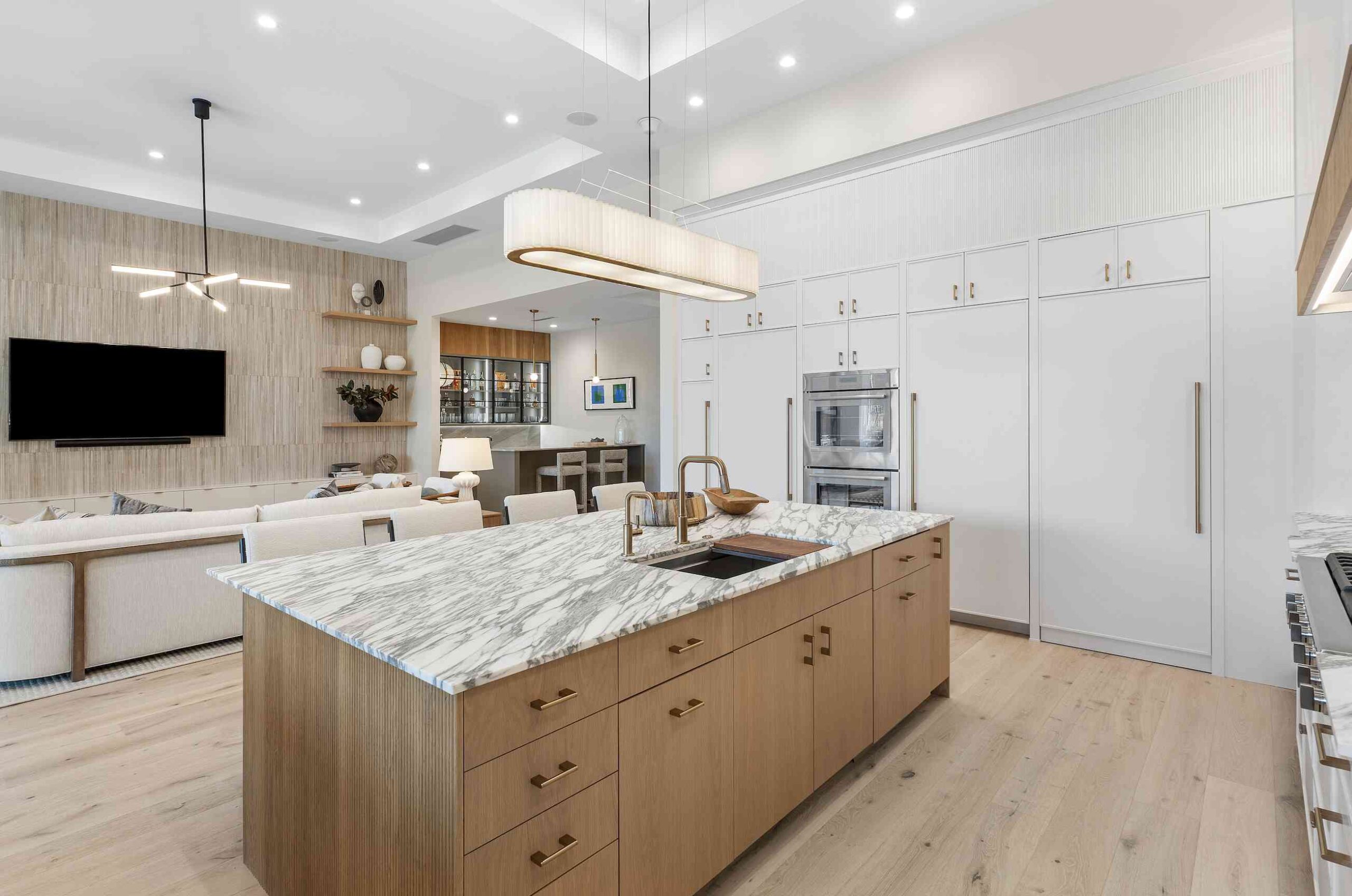
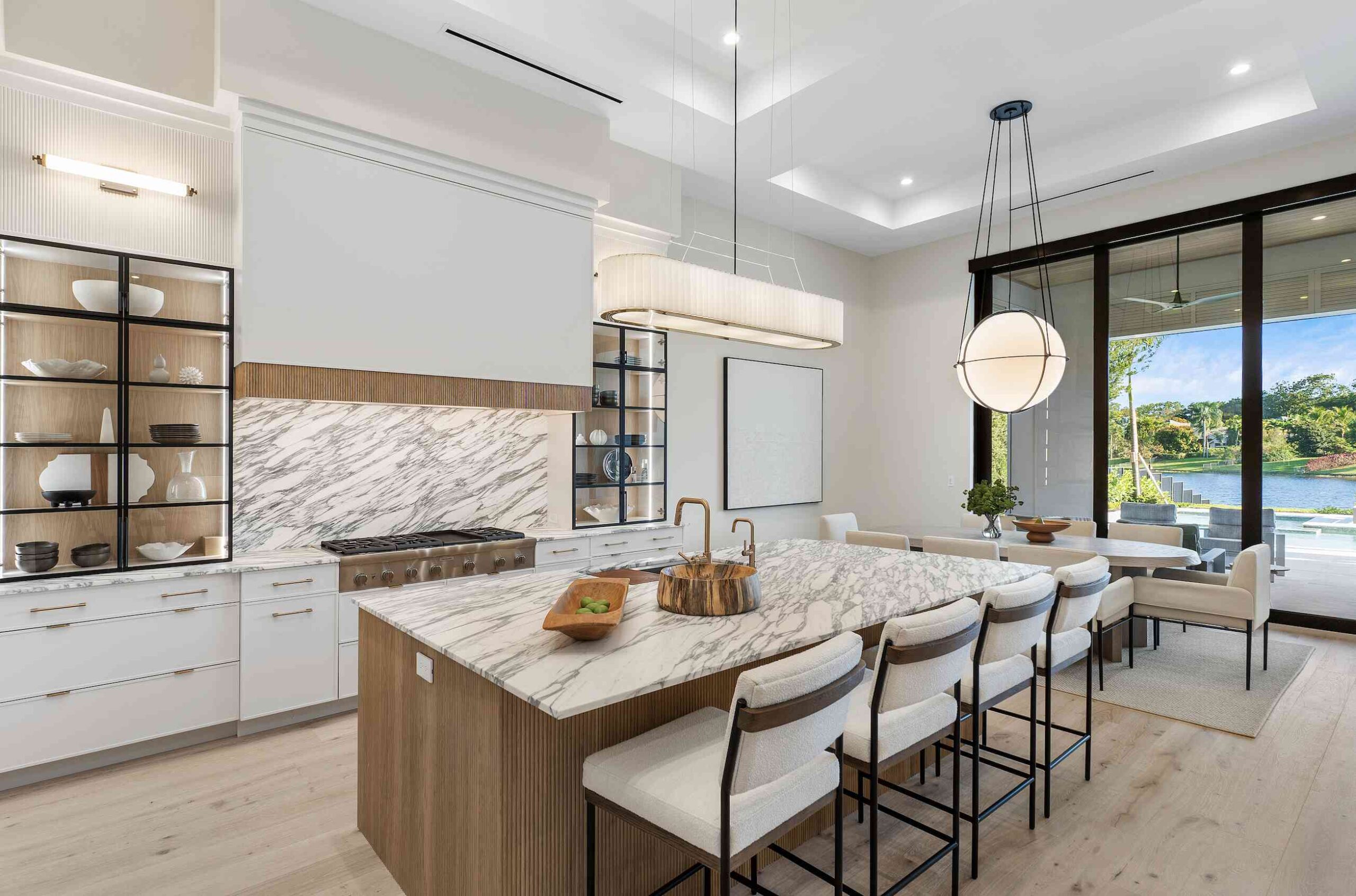
The choice between peninsulas and islands remains hot in 2025. Islands need space on all sides (42-48 inches works best) while peninsulas need room on just three sides. A peninsula extends from your existing cabinets, making it perfect for smaller kitchens where islands won’t fit. Islands give better traffic flow and often house major appliances like sinks, dishwashers, and cooktops.
Integrated dining and living zones
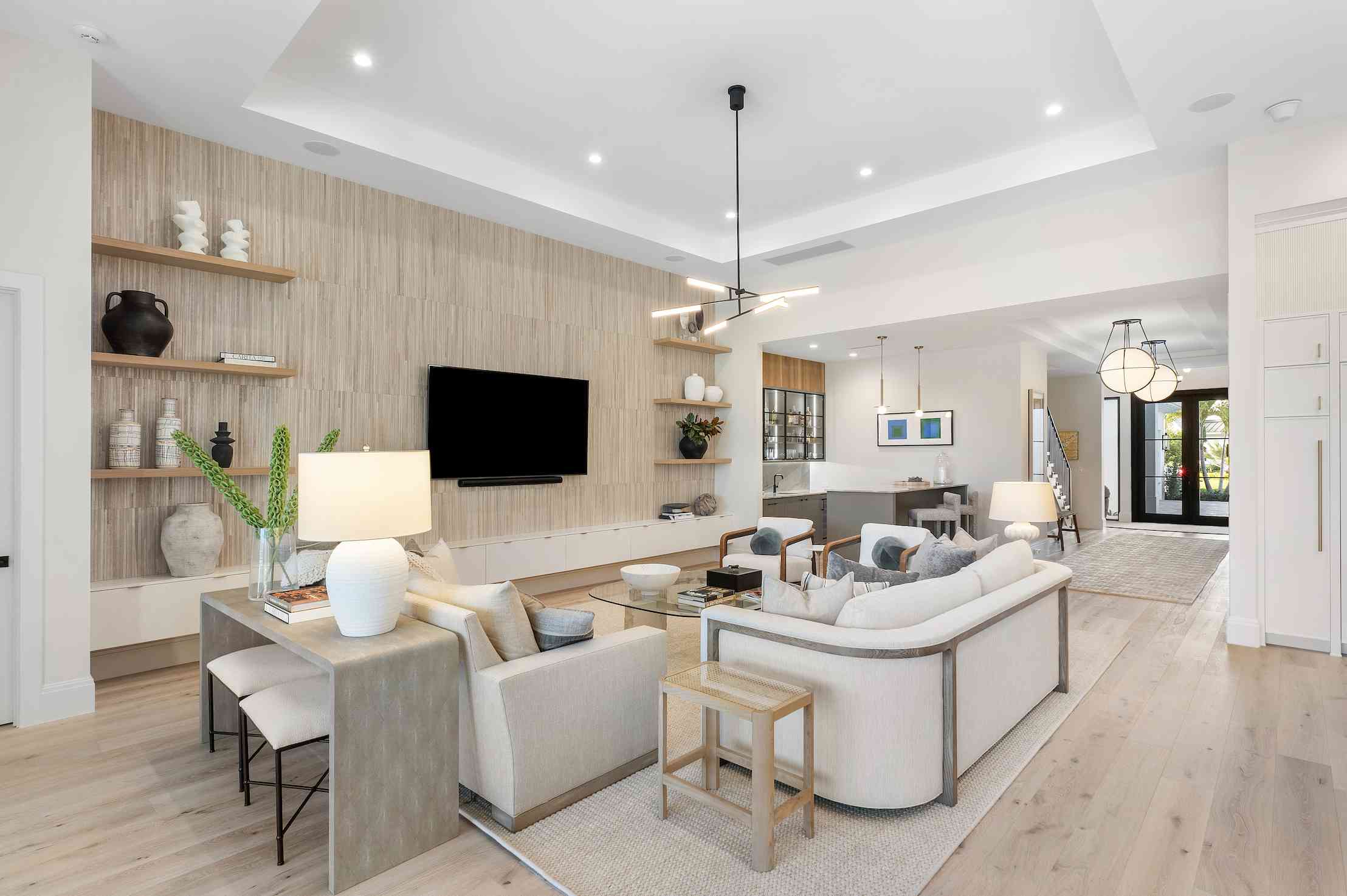
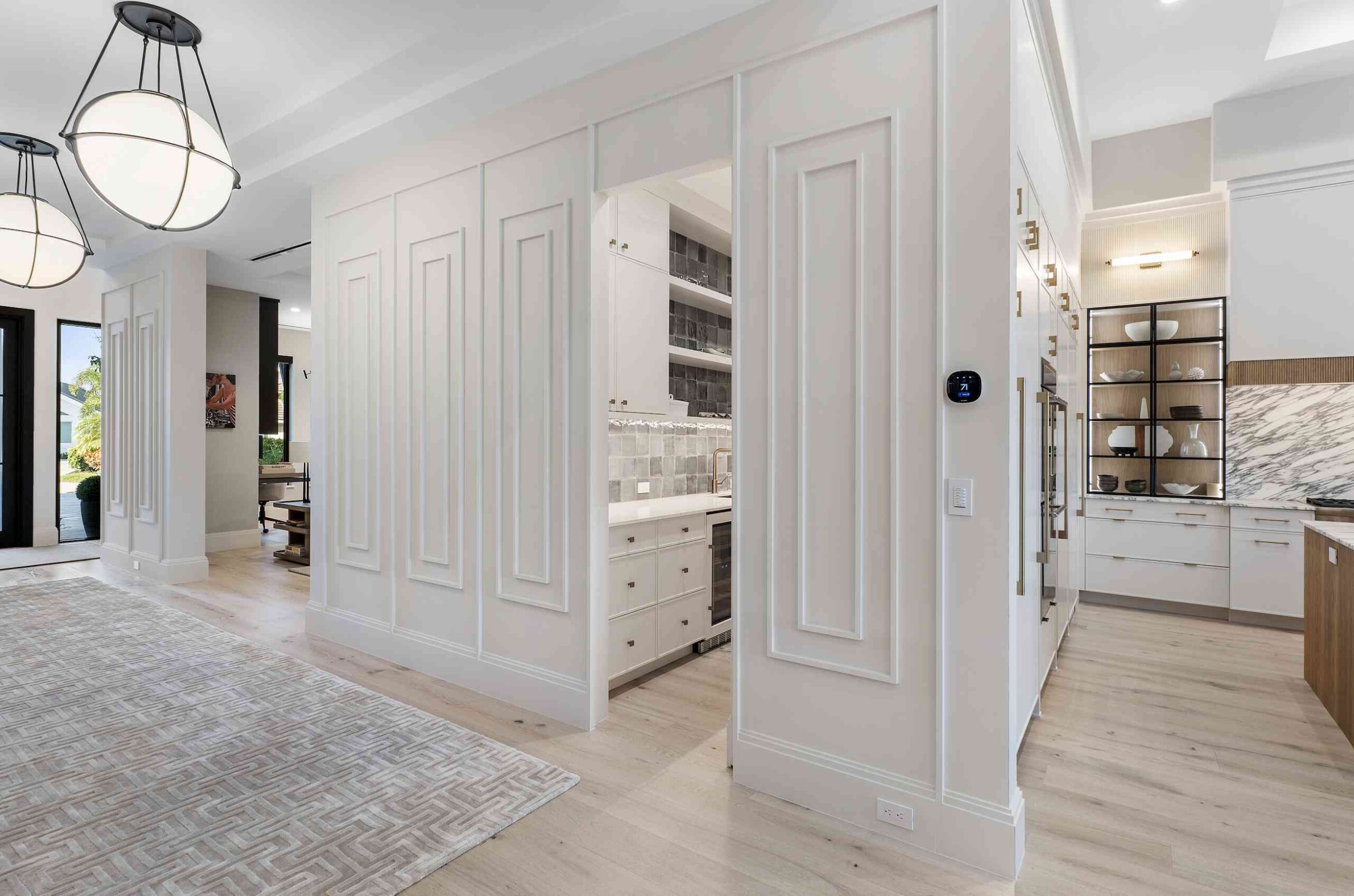
Open kitchens merge naturally with living spaces to create multipurpose areas. This setup breaks down walls, brings in more light, and lets people chat while cooking. The space between areas uses matching floors and colors to create unity.
Minimalist and Scandinavian styles
Scandinavian kitchen design combines simple functionality with comfort and natural beauty. These kitchens feature clean lines, neutral colors, and green materials. Light woods such as maple, birch, or oak stand out, while clean counters and handleless cabinets add to the minimal look.
Furniture-style islands and open shelving
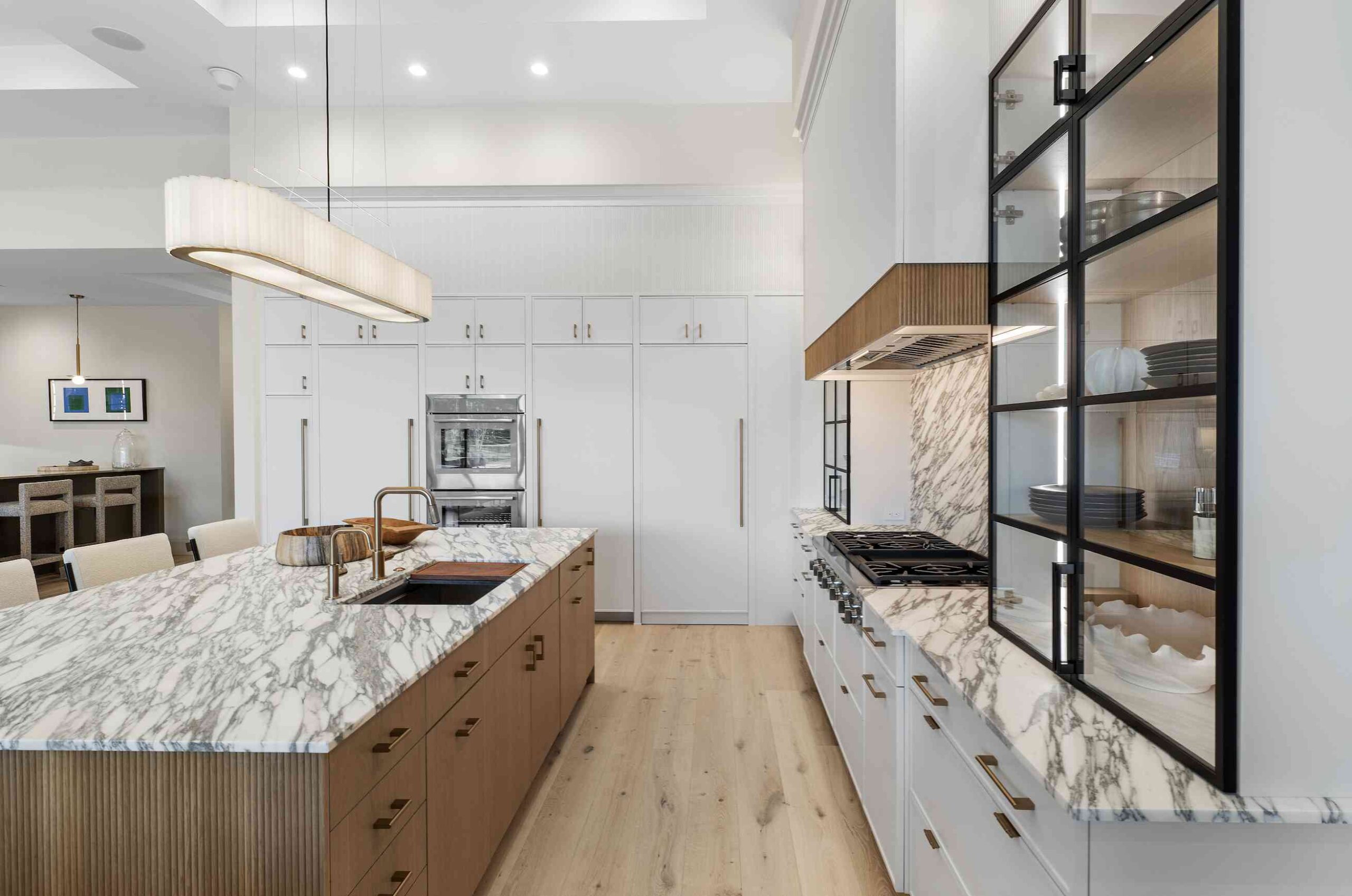
Islands inspired by furniture add unique character to open kitchens. Old antique pieces, haberdashery cabinets, and lab tables turn these gathering spots into conversation pieces. Open shelving comes in many forms – wrap-around, under-cabinet, or built into islands. It displays your favorite dishes and cookbooks while making them easy to reach. These storage options keep everything handy and add visual appeal to open kitchen designs.
Smart Design Tips for a Functional Open Kitchen
A beautiful open kitchen that works just needs attention to several core elements. These smart design choices will give your space both style and functionality.
Use lighting to define zones
The right lighting creates natural boundaries in open kitchens without physical walls. You should layer three lighting types: task lighting for work areas, ambient lighting for overall illumination, and accent lighting to highlight features. Pendant lights above islands mark prep areas clearly. Different fixtures over dining spaces create distinct zones. Your design should coordinate fixtures through common elements like finish or style. Under-cabinet lighting plays a vital role in workspaces and eliminates shadows on countertops.
Choose cohesive color palettes
A smart color palette creates visual flow throughout connected spaces. Pick one foundation palette of three to five colors – typically one light color, one or two neutrals, and one or two supporting colors. Neutral tones create a relaxed backdrop that allows personality through textured elements and accessories. Your spaces should use colors consistently but in varying concentrations.
Add storage with multifunctional furniture
Open layouts require every piece to serve multiple purposes. Kitchen islands with built-in storage work as seating and prep space. Your furniture should pack away easily or serve dual functions—this matters even more in smaller spaces. Vertical shelving adds storage without taking up floor space.
Control noise and cooking odors
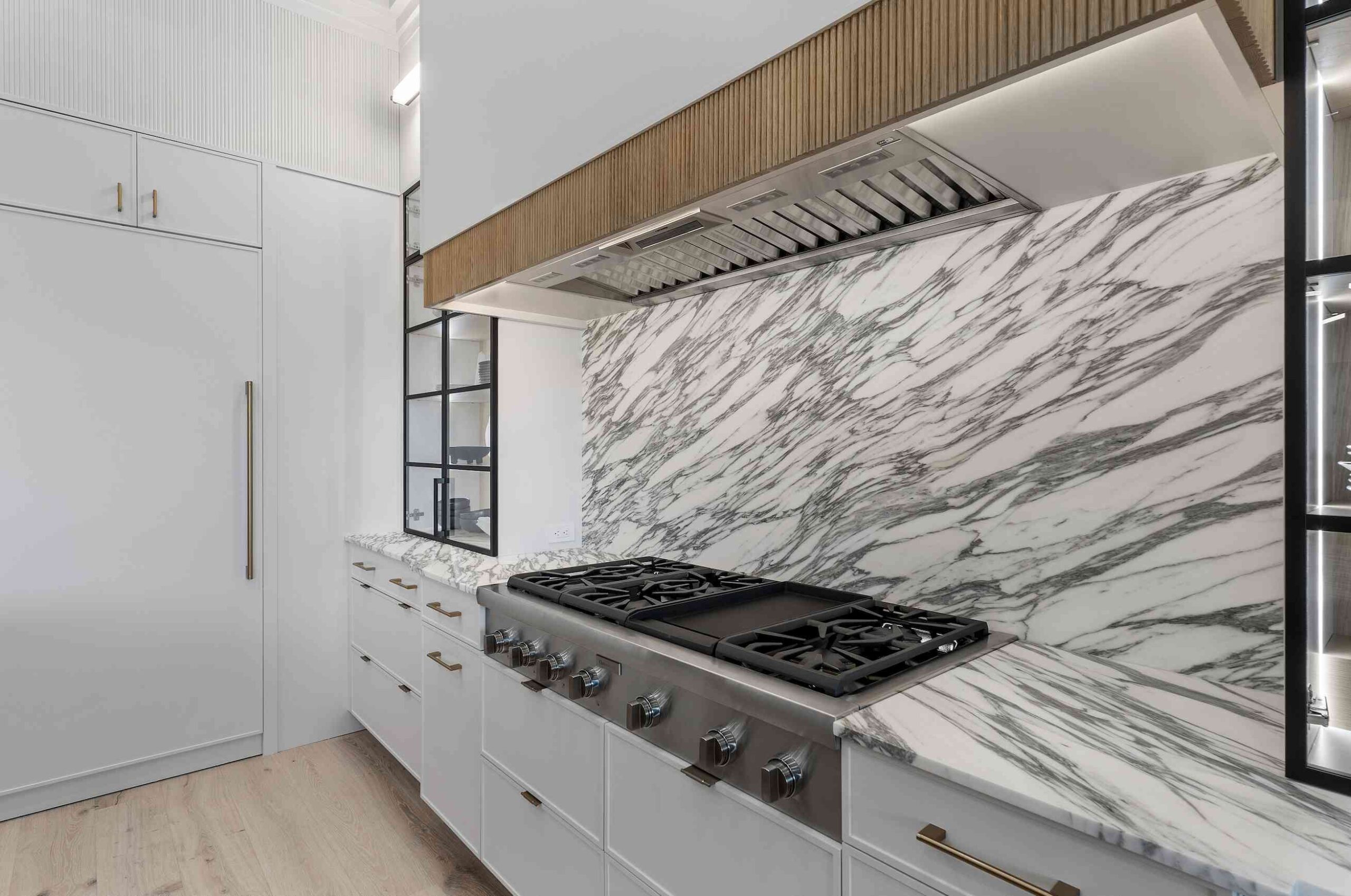
Open kitchens face two big challenges—noise and odors. Powerful range hoods or exhaust systems should sit in the right position to create odor-neutral environments. Noise control comes from appliances with special volume features. This prevents humming refrigerators or noisy dishwashers from disrupting living areas.
Maintain visual harmony with adjacent rooms
Your kitchen and living room furniture should match carefully to create smooth transitions. The same flooring throughout connected spaces and repeated design elements like cabinet finishes tie areas together. A central island or counter works as both visual divider and connecting element between kitchen and living zones.
Conclusion
Open concept kitchens have proven themselves since Frank Lloyd Wright’s groundbreaking 1934 design. They’ve become vital parts of modern homes. These spaces do more than just look good – they change how families connect, entertain and share their daily lives.
The story of open kitchen layouts shows why they’re still popular in 2025. Taking down walls brings in natural light and encourages easy interaction between cooking and living spaces. You can keep an eye on kids while cooking dinner. Hosts can chat with guests as they prepare food. Families get flexible spaces that adapt to their changing needs.
These kitchens work well in homes of all sizes. Medium spaces benefit from L-shaped designs, while one-wall layouts work wonders in smaller homes. Islands double as work areas and gathering spots that define spaces without blocking the open feel.
Smart planning makes open kitchens successful. Well-placed lighting creates distinct zones without walls. Colors that work together ensure smooth visual flow between areas. The right furniture provides storage without making spaces feel cramped.
Open concept kitchens aren’t just another trend – they’ve become the heart of modern homes. They reflect our need to connect, adapt and be together. Whether you’re updating an old house or building new, an open kitchen layout brings practical benefits that boost daily life. These kitchens help both function and family bonds naturally, making them a lasting choice rather than a passing fad.
FAQs
Q1. Are open-concept kitchens still popular in 2025? Yes, open-concept kitchens remain popular in 2025. They continue to be favored for their ability to enhance social interaction, improve natural light, and create a sense of spaciousness in homes. While closed-concept layouts offer some advantages, the benefits of open kitchens align well with modern lifestyles and preferences.
Q2. What are the main benefits of an open kitchen layout? Open kitchen layouts offer several key benefits: they improve flow and accessibility, allow more natural light and ventilation, encourage social interaction, and are ideal for multitasking and family life. These designs create a seamless connection between cooking, dining, and living areas, making them perfect for modern households.
Q3. How can I make my open kitchen more functional? To enhance functionality in an open kitchen, consider using lighting to define zones, choose cohesive color palettes, add storage with multifunctional furniture, control noise and cooking odors with proper ventilation, and maintain visual harmony with adjacent rooms. These strategies help create a well-organized and efficient space.
Q4. What are some popular open kitchen designs in 2025? Popular open kitchen designs in 2025 include L-shaped and U-shaped layouts, one-wall and galley configurations for smaller spaces, and designs featuring islands or peninsulas. Minimalist and Scandinavian styles are trendy, along with furniture-style islands and open shelving for added character and storage.
Q5. How can I create distinct zones in an open kitchen layout? You can create distinct zones in an open kitchen layout through strategic lighting, consistent color palettes, and thoughtful furniture placement. Use pendant lights over islands or dining areas to define spaces, coordinate colors across connected areas, and position furniture or islands as natural dividers while maintaining an open feel.